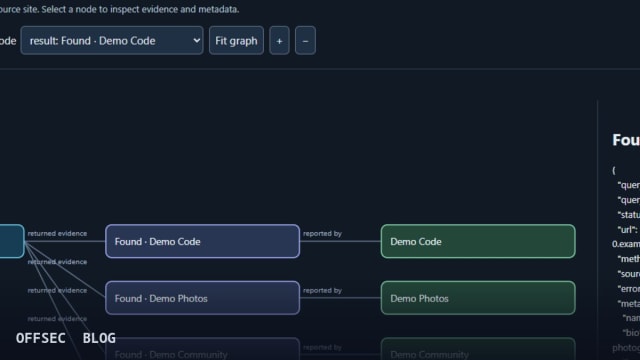
Consensus-OSINT merges the lookup catalogs of 19 open-source OSINT projects into one deduplicated engine for username, email and phone searches in authorized investigations.
| Tool | OSINT-Experts-Society/Consensus-OSINT — unified OSINT lookup tool combining 7,900+ modules from 19 open-source projects |
| Category | Open-source intelligence / identity footprinting (Python, GPL-3.0) |
| Primary Use | Correlating username, email and phone identifiers across thousands of sites during authorized investigations and digital-footprint audits |
| Safe Use | Intended for authorized OSINT investigations, security assessments, missing-person work and defensive exposure mapping conducted by professionals with a lawful basis |
| Telemetry Note | Every query generates outbound HTTP requests from the operator's IP to thousands of target sites; site owners can observe high-volume enumeration patterns, so investigators should route and rate-limit deliberately |
Consensus-OSINT, published by the OSINT-Experts-Society organization under GPL-3.0, is an attempt to solve one of the most chronic frustrations in passive reconnaissance tooling: fragmentation. The username-enumeration space is crowded with overlapping projects — Maigret, Sherlock, WhatsMyName, User Scanner, Holehe and many others — each maintaining its own site list, its own request logic and its own output format. Rather than adding yet another scanner, Consensus-OSINT ingests the catalogs of 19 open-source projects, deduplicates overlapping routes, standardizes the modules and exposes them through a single interface with a weekly expert-review target.
The numbers in the README are the pitch. The 19 source projects collectively enumerate 12,356 modules and site rules including overlaps; after expert review, testing, improvement and deduplication, 7,989 enabled modules and rules ship inside Consensus-OSINT. The project's last documented expert review is dated 02 October 2026, with the latest intake adding 1,181 modules and 668 site rules — a cadence that matters enormously in this niche, where site templates and API endpoints rot quickly. For comparison, the README itself notes that several famous source tools have had no module updates in over six months, some dating back to 2023 or earlier.
What the tool actually queries is split across three identifier classes. Username coverage is the bulk of it: 7,782 enabled username modules, dwarfing any single upstream project — the largest source, Maigret, contributes 5,483 sites, with User Scanner at 2,511, WhatsMyName at 716 and Sherlock at 481. Email lookup is served by 205 modules, consolidating catalogs from Holehe (123 email-check sites) and User Scanner (211 before deduplication). Phone intelligence is comparatively thin at 2 enabled modules, which the README's own comparison table makes no effort to hide — useful honesty for anyone evaluating coverage claims.
The deduplication story is the most interesting engineering detail in the documentation. The comparison table maps each upstream tool's modules against the consolidated catalog and reports duplicate ratios: Sherlock sits at 98.5% overlap with other sources, GoSearch at 92.6%, Nexfil at 89.3%, while Holehe's email modules overlap only 28.5% and UserJoo just 6.9%. In other words, running the popular tools individually produces massively redundant requests against the same sites. Consensus-OSINT removes duplicate routes during default searches, which reduces both the noise in results and the observable request footprint against any given target site — a legitimate operational consideration even in fully authorized work.
Architecturally, the repository topics reveal more than the prose. Consensus-OSINT ships as a Python package with both a cli and what the topics call an application start screen offering username, email, phone and bulk-search modes, suggesting a local web UI rather than a bare command-line experience. The bulk-search topic indicates batch identifier processing, which is the natural workflow for exposure audits across a list of corporate email addresses or an organization's known handle conventions. The presence of graph-visualization among the topics points to evidence graphs — linked nodes connecting identifiers to discovered accounts — and mcp-server plus model-context-protocol indicate the tool can be exposed as an MCP server so AI assistants can invoke lookups as tools.
The MCP integration deserves attention from professional users. The Model Context Protocol has become the standard plumbing for letting LLM-based analyst workbenches call external capabilities. By implementing an mcp-server, Consensus-OSINT positions itself as a data source inside agentic investigation pipelines rather than a standalone utility, letting an analyst ask a question in natural language and have the orchestrator run the appropriate lookups. That pattern fits the OSINT Experts Society framing — the README links the project to the organization at osint.ngo — and suggests the intended audience is professional investigators, not casual curiosity searches.
From a results-quality perspective, the README promises enriched results and unified presentation rather than raw site-by-site hits. The process diagram describes the pipeline as: source projects list candidate modules, experts test, improve, standardize and deduplicate them, and default searches then select only relevant modules per identifier type before presenting consolidated output. That relevance-selection step is significant for operational discipline — querying 12,000 routes for a phone number would be wasteful and noisy, so the tool's module-selection logic is doing real work between the catalog and the query.
Where this fits in an authorized workflow is straightforward. During an engagement with proper scope and legal basis — corporate exposure assessments, brand-impersonation review, incident-response attribution support, missing-person or due-diligence investigations — an analyst would previously install and update five or six separate scanners, reconcile their contradictory results and manually strip duplicates. Consensus-OSINT replaces that stack with one installation and update path, one result format and one evidence graph. The weekly-review commitment is the maintenance moat: coverage claims in this genre decay fast, and a tool that honestly publishes its review dates (as this README does) is easier to trust than one asserting a large module count with no provenance.
Operational and legal caution remains essential regardless of the tool's polish. Every lookup generates real requests from the operator's IP address to thousands of third-party sites, and bulk runs are trivially identifiable as automated enumeration by any site operator watching logs. Investigators handling personal data through email and phone lookups also carry data-protection obligations — results tying identifiers to accounts constitute personal data in most jurisdictions, so retention and purpose limitations apply. The tool is a research instrument; the compliance burden stays with the operator.
Caveats worth noting before adopting it: the project is young by star-count standards (around 99 stars at the time of this review), so community scrutiny of the merged module set is still limited, and the phone-lookup category is too sparse to rely on. The comparison table, while transparent, is also self-authored marketing — the duplicate-ratio math favors the aggregator by construction. Still, the idea is sound and the execution documented in the README — standardized modules, deduplicated routes, evidence graphs, MCP exposure, honest review dates — addresses genuine pain points. For authorized professionals tired of juggling Maigret, Sherlock and Holehe side by side, Consensus-OSINT is one of the more credible consolidation plays in the username-enumeration space.
OSINT-Experts-Society/Consensus-OSINT.Educational analysis for authorized security professionals. Use only in controlled, authorized environments.
Related coverage


0 comentários:
Post a Comment
Note: Only a member of this blog may post a comment.